
I’m an optimist by nature.
I think attention and judgment compound over time. That is a different claim from assuming things work out.
My passion for investing began early, thanks to my grandmother Gloria, who sparked my interest as a teenager. Over time I realized that markets were a window into something larger: how people make decisions under uncertainty, and why those decisions, in aggregate, shape the world.
I read political science at the University of Kentucky on a four-year ROTC scholarship, then served four years as an Air Force officer. It didn’t take long to learn that in dynamic environments, plans rarely survive contact with reality. The work sharpens judgment, exposes assumptions, and teaches you to adapt when conditions change.
When my commitment ended I spent several years in the bourbon industry before accepting what had been obvious for some time: I was going to spend my life studying markets. After learning the business at a regional firm, I founded Vermillion Private Wealth in 2020, and finished an executive MBA in 2023. I wanted to build a practice on my terms.
Outside of finance, I read constantly, write regularly, play tennis, and listen to a great deal of music (you might enjoy my curated playlist). My daughter keeps teaching me the limits of control, which turns out to be useful training for this job.
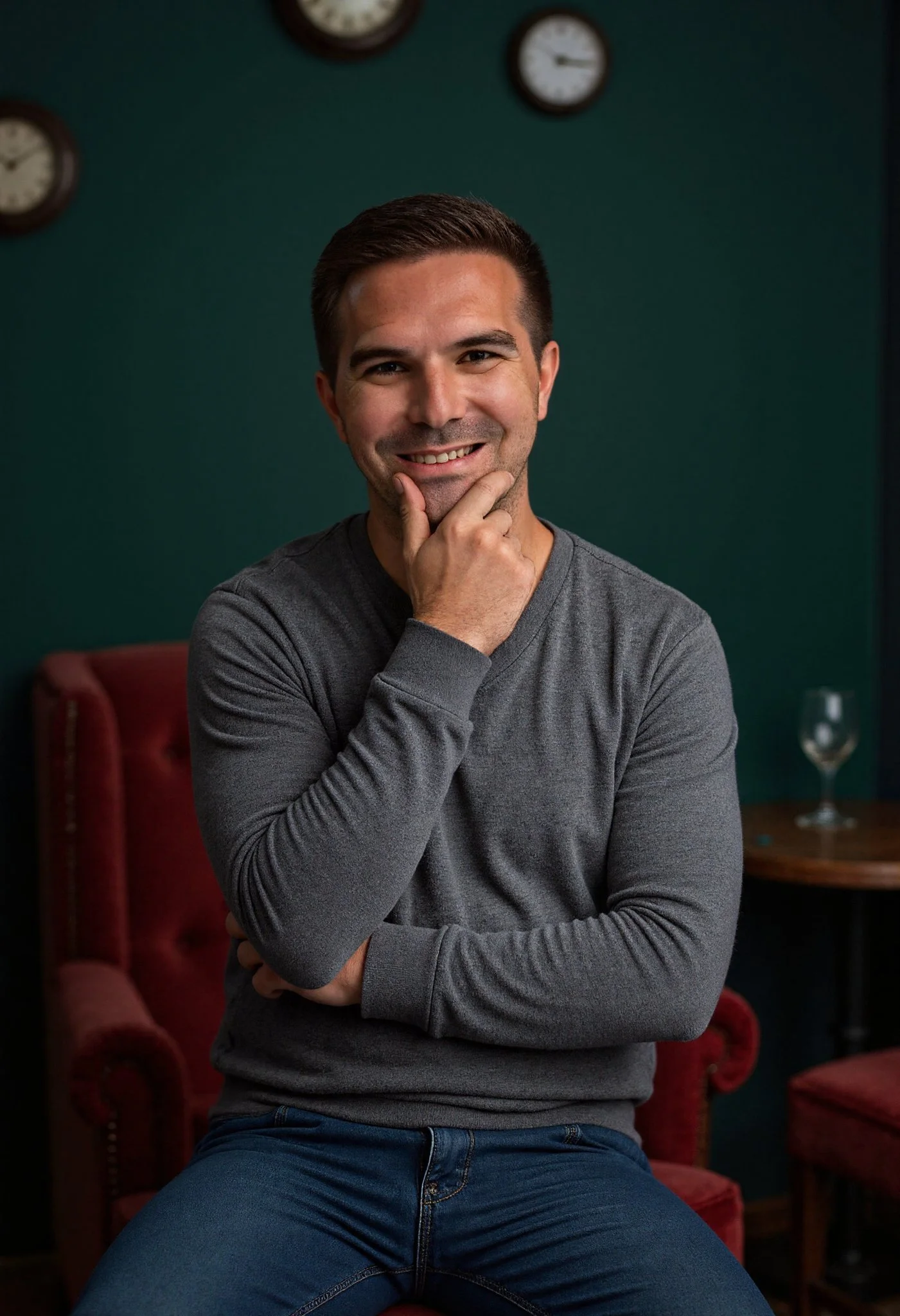
James Vermillion

How I think about the work
Austrian economics
Hayek · Mises · Böhm-BawerkValue is subjective, knowledge is dispersed, and production takes time. No one holds enough of the picture to direct the whole of it, which is why prices exist at all. It gives me a reason not to forecast, and a way to read what the market is charging instead.
Popperian epistemology
Karl PopperYou cannot verify a theory, only fail to refute it. What matters about any claim is whether it says in advance what would prove it wrong. So every position carries a standing question: what would show this to be wrong?
Classical liberal thought
Smith · Ferguson · BastiatOrder that no one designed is still order. It emerges from many people reasoning independently, not from a designated authority pronouncing on their behalf. Judgment formed here rather than borrowed: analyst targets and consensus ratings are excluded by design.
Anchored in principles
Those three traditions are where the thinking comes from. These five are what it commits me to.
-
01
Positive-sum relationships
In game theory, a positive-sum outcome is one where value is created rather than transferred and where all parties are better off, not merely less worse off.
At Vermillion Private Wealth, I structure relationships so that trust compounds over time. My success is inseparable from my clients’ success.
-
02
Help clients own the upside
While uncertainty is real, so is progress. Human ingenuity, innovation, and adaptation have a long track record of reshaping constraints into opportunities.
My job isn’t to deny risk. It’s to understand it well enough that clients can participate in the upside without being destroyed by the downside.
-
03
Epistemic humility
Physicist Richard Feynman warned, “The first principle is that you must not fool yourself, and you are the easiest person to fool.”
Markets punish self-deception ruthlessly. I work hard to question my own assumptions, expose blind spots, and revise beliefs when reality disagrees.
-
04
Robustness over precision
Turn-by-turn directions are great unless you are going to the wrong destination. The future is uncertain and forecasts fail. But direction still matters.
My goal isn’t to be perfectly right at every step; it’s to stay oriented toward resilience, adaptability, and durable outcomes over time. Directional correctness beats false precision every time.
-
05
Act with fairness & justice
Justice is one of the four Stoic cardinal virtues and is paramount to living a well-lived life, and to operating a successful business.
That means acting fairly when it’s easy and when it’s inconvenient.
If you’ve read this far, we should talk.
Twenty minutes, no pitch. Bring a decision you’re stuck on, a portfolio you inherited, or a question you’ve been too embarrassed to ask someone who charges by the hour. I answer everything myself, usually within a day.
My broader writing lives at jamesvermillion.com: essays on classical liberal thought, emergent order, the knowledge problem, and the moral foundations of a free society, along with occasional fiction and poetry. The work there is one part of the same intellectual project that shapes how I approach wealth management; readers of Venture & Gain often find that the personal essays fill in the broader tradition the investment writing draws from.